— Hey guys, quick plug before we start:
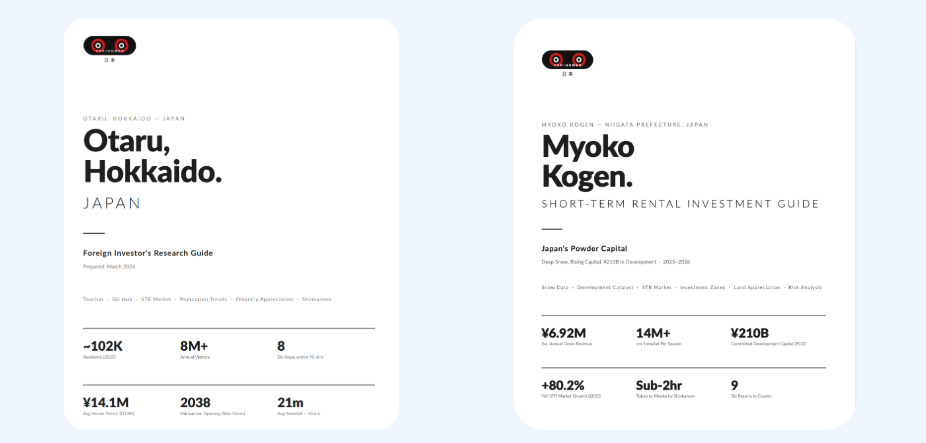
First, something serious: Our Otaru Investment Guide & Myoko Investment Guide. We spent half a year on these, they are packed with data and everything you need if you’re considering buying a ski home, in my two favorite towns.
Second, something silly: The YukiHomes Beanie. If you want to look as dumb as me, hit the preorder link, shipping Summer 2026, only making 50 because we are not sure how many people actually want them, so they will be limited. —

The first time you use a toilet in Japan, you’ll notice something very obvious.
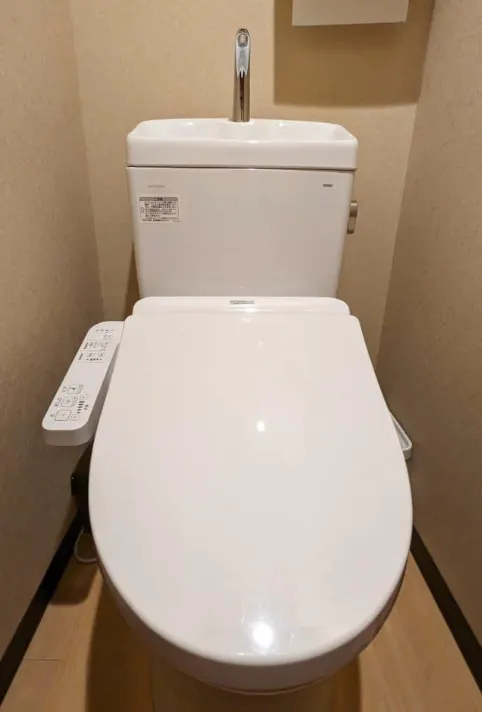
You flush, and clean water starts running out of a faucet on top of the toilet tank.
There’s never soap there, so you splash your hands around in some painfully cold water (I’m up north in Otaru).
Then you step outside the toilet room and realize something else.
The toilet isn’t even in the bathroom.
You don’t understand how many times I’ve walked into the shower room to go to the bathroom, only to remember I’m in Japan and the toilet is on the other side of my house.
It’s funny because everyone who come stays at our house does the same thing…
The shower and bath are in one fully sealed, waterproof room. The sink is somewhere else. The toilet is in its own tiny chamber. It’s like the entire house was designed by someone who thinks about water, hygiene, and space very differently than we do in the West.
Because it was.
And once you understand why, it makes sense.
The Sink on Top of the Toilet Isn’t About Hygiene
At least not primarily.
The faucet that runs when you flush isn’t pulling used tank water. It’s fresh, clean tap water. You rinse your hands, and instead of going down a drain, that water fills the tank for the next flush.
It’s a closed-loop refill system.
In other words:
You’re not washing your hands because you flushed.
You’re washing your hands because the toilet needed to refill anyway.
The handwashing is secondary. The water efficiency is the point.
Post-war Japan built housing around density, conservation, and efficiency. Smaller footprints. Less waste. Fewer unnecessary systems. If the toilet tank is going to refill with clean water no matter what, why not use that water once before it disappears into the tank?
And the lack of soap makes sense too, because you don’t want your tank to build up soap scum.
That little faucet isn’t meant to replace a real sink. It’s a quick rinse station. The proper sink, with soap, mirror, and counter space, is usually in the washroom just outside. The tank-top faucet is just a clever bonus.
It’s minimalist engineering disguised as a quirky feature.
And Then There’s the Separate Toilet Room
In most North American homes, the toilet lives inside the bathroom. If someone’s showering, the toilet is occupied. If someone’s taking a long bath, you may have to run in the backyard and pee.
In Japan, you don’t have that issue and it’s awesome.
The toilet is in its own room. The bath and shower are in a separate, fully waterproof wet room. The sink often sits in a third space between them.
Three functions. Three zones.
Why?
Because bathing in Japan isn’t just about getting clean. It’s a ritual.
You shower first. Thoroughly. Then you soak in a deep, hot tub, the ofuro, to relax. It’s like the Japanese version of a sauna.
(And side note: If you’re into maximizing your health, I read, don’t quote me on this, that a hot soak raises your core temperature longer and better than a sauna, which means more heat shock proteins if your into that type of stuff.)
Sometimes the whole household shares that bathwater (not at the same time). The bath is a clean, restorative space.
The toilet is not.
Culturally and psychologically, the two are distinct. Clean vs. unclean. Relaxation vs. necessity. Keeping them physically separate reinforces that boundary.
It’s also very practical.
Japanese bathrooms are often modular waterproof units. The entire floor has a drain. You can spray down the walls. Everything gets wet. That design works beautifully for showering, but not for a toilet. Constant humidity, splash, and moisture would create odor and maintenance issues.
So the toilet gets its own dry, ventilated room.
Smaller space. Easier airflow. Contained smells.
In dense cities like Tokyo or Sapporo, square footage is precious. But families still need functionality.
If one person is soaking for 30 minutes, someone else can still use the toilet. Someone else can brush their teeth at the sink. The house doesn’t pause because one room is occupied.
Most foreigners think it’s weird at first.
Then they go back home, someone locks the bathroom door for a 40-minute shower, and suddenly Japan starts to feel ahead of the curve.
Not because it’s high-tech.
But because it’s thoughtful.
Browse opportunities yourself: Check out current listings at Nipponhomes.com
Book Consultation | Subscribe to our newsletter
We’ve been building out a solid list of travel + ski partnerships lately.
If you’re gearing up for a trip and need things like luggage, Goggles, insurance and much much more there are some really good deals below.
We’re always looking to partner with great travel + ski brands.
If you’d like to be featured on our perks page or partner with us, reach out here:
This content is for informational and educational purposes only and reflects my personal opinions and experience. I am not a licensed financial advisor, tax advisor, or attorney. Readers should conduct their own due diligence and consult qualified professionals before making any investment decisions.

Take the Next Step
Join our community for exclusive insights and resources on Japanese real estate investments.

Our team
Meet the founders.

Derek has been working in the Airbnb space for the past 10+ years and recently purchased a home in Japan. He is excited to bring this investment opportunity to others in the States & abroad.

Nick has a passion for adventure and has always dreamed of owning a property in Japan. His dreams finally came true when Derek brought him in on a deal of a lifetime in Hokkaido, Japan - one of Nick's favorite places on Earth.