We all love Japan. If your reading this or following my Instagram or you’re one of our clients. Its safe to say you love Japan.
But the love and admiration people have for Japan is kind of unmatched when you think about it. Every country has its fans. While not a country, you have your Euro-philes, People who love Australia, Korea and China.
The US… yeah maybe not our peak popularity moment right now, but I’m sure we got some fans out there.
But Japan sits in a different category.
And it’s not just one thing. It’s across everything. Anime has quietly become one of the most dominant cultural exports in the world. There are entire generations now who grew up on it, follow it closely, and engage with it the same way people used to with Hollywood movies and TV.
But it’s not just anime. It’s food. It’s denim. It’s knives. It’s watches. It’s cars. It’s fishing culture (yes Japan makes the best fishing equipment in the world). It’s architecture. It’s convenience stores.
Every niche you can think of… Japan is somehow elite at it.
And every time I come back here I find a new reason why people are obsessed.
It almost feels like Japan just does everything better.
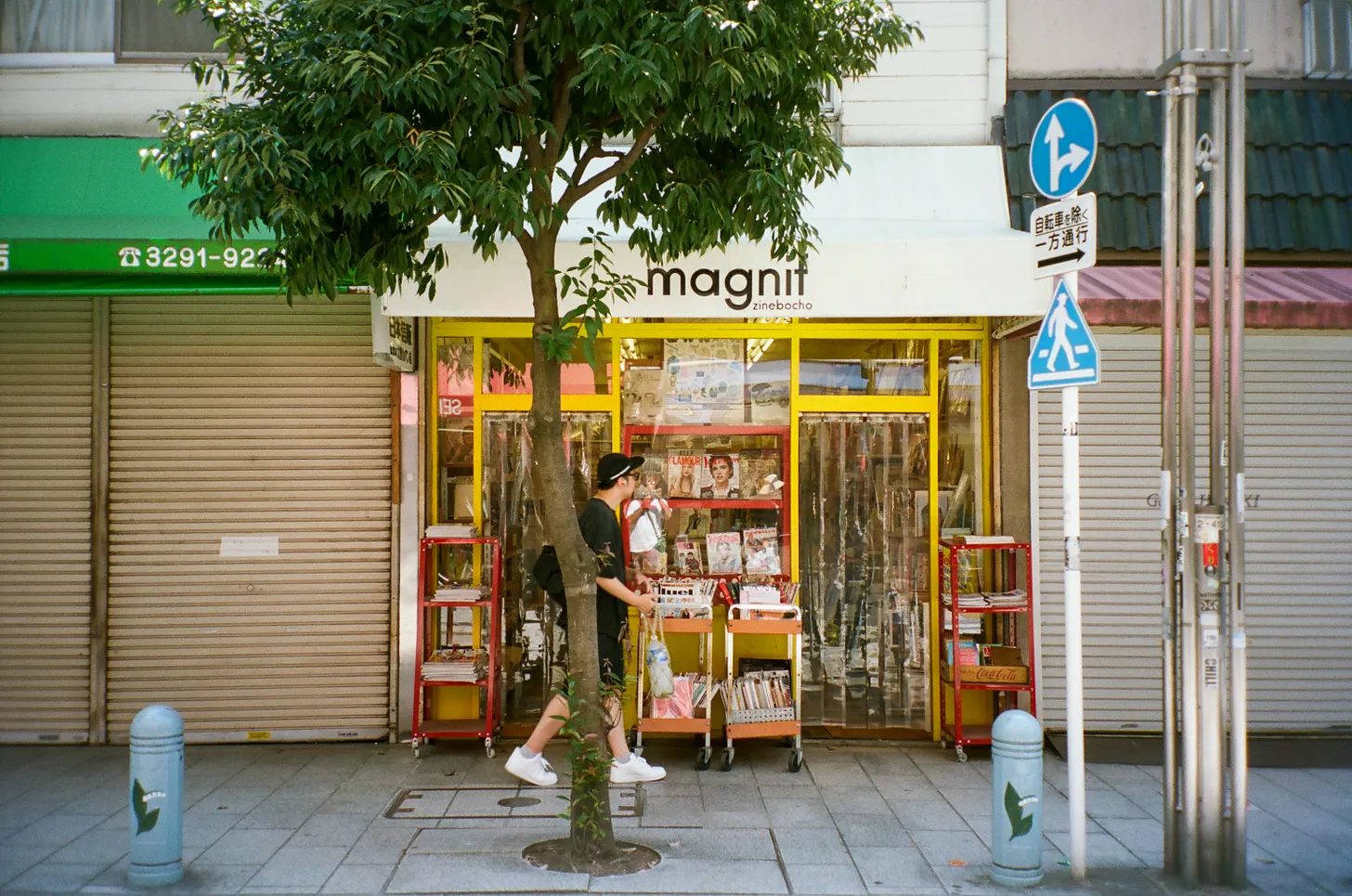
If Japan decides they care about something, they just go all the way. You’ll find some random Italian restaurant in a side street that’s better than places in Italy (The best cacio pepe i’ve had in my life was in Japan hands down). You’ll find a tiny model car shop in the middle of nowhere packed wall to wall with thousands of perfectly detailed collectibles.
And yeah, you can find stuff like this in the US. But it’s usually concentrated in a few neighborhoods or big cities.
In Japan, it’s everywhere. It’s not limited to “cool areas” or major metros. It shows up in small towns, random side streets, places you wouldn’t expect anything special.
My town in northern Japan has maybe 100,000 people, and there are multiple cocktail bars here that would genuinely hold their own in NYC.
And when you’re around people who actually care about what they’re making or serving you, you can’t help but admire it. It makes you want to come back more.
That’s the part that keeps pulling me in.
So the easy answer is “Japanese people are just more obsessive” or “they’re better craftsmen.”
I don’t buy that.
That feels lazy.
My theory is much simpler and more interesting because I think you could recreate this culture anywhere.
Japan might be the most pro small business country on earth.
And whether that was intentional policy or just how things evolved over time, it created the perfect environment for craftsmanship to thrive.
Because at the end of the day, all of these things people love about Japan… they’re small businesses.
Tiny ramen shops. One-man denim brands. Family-run sushi counters. Independent cafes. Niche retail stores.
So why does Japan produce so many of them?
Japan’s zoning system is completely different from places like the US. Instead of hyper-restrictive, use-based zoning where entire areas are locked into “residential only” or “commercial only,” Japan uses a national zoning system with 12 categories that are much more flexible.
And here’s the key point.
There are no strictly “exclusive” residential zones in the way Americans think about them.
Even in the most restrictive residential zones, you can still run small-scale businesses. We’re talking shops, offices, clinics, cafes. Low-impact commercial activity is allowed almost everywhere as long as it doesn’t create too much noise, traffic, or pollution.
That’s a massive difference.
It means you can turn the first floor of your house into a business. It means you can open a small shop in your neighborhood. It means commercial activity is embedded into daily life instead of being pushed into a few expensive corridors.
Now compare that to somewhere like Long Island where I grew up.
Zoning is tight. Commercial space is limited. And because of that, the few available retail locations become insanely expensive. So only certain types of businesses can survive. Chains. Or concepts with high margins. Or legacy spots that bought their property decades ago.
And every year it seems one more family run buisness dies and another chain takes it over.
My dad always used to say restaurants are one of the hardest businesses in the world. High failure rates. Thin margins. And you see it. Places open and close constantly.
In the US a lot of that pressure comes from rent.
If your rent is crushing you, you don’t have time to perfect your craft. You’re just trying to survive.
And it creates this weird dynamic where mediocre businesses can stick around purely because they own the building, while new, potentially better operators can’t even get in the door.
Japan is the complete opposite.
Because zoning is more permissive, there are way more potential storefronts. Supply of small commercial spaces is much higher. And that keeps rents, especially for small spaces, magnitudes more accessible compared to major Western cities.
Lower barrier to entry means more people can try.
More people trying means more competition.
And more competition at the small business level leads to hyper-specialization and quality.
Because if you open a ramen shop and there are 10 other ramen shops nearby, you don’t win by being average. You win by being insanely good or you close.
Same with coffee. Same with denim. Same with sushi. Same with literally anything.
So instead of a few dominant players, you get thousands of small operators all trying to outdo each other.
That’s where the magic comes from.
It’s not that Japanese people are inherently more obsessive.
It’s that the system allows more people to care deeply about something and actually make a living doing it.
And when enough people are given that opportunity, you end up with a culture that feels obsessed with quality.
Even Japan’s challenges kind of prove this point.
You are seeing small businesses close, especially in rural areas. But a lot of the time it’s not because they weren’t profitable. It’s because there’s no successor. The owner gets old and there’s no one to take over.
That’s a very different problem than “this business model doesn’t work.”
So when people say “why is Japan so special,” I don’t think it’s one thing like anime or food or culture in isolation.
I think it’s structural.
Japan accidentally or intentionally built a system that makes it easier to be a small business owner.
And when you make it easier for normal people to create something special…
Guess what happens?
The rest of the world is falls in love…
And here’s some data to back up what I’m saying:
- Japan has ~50% more employer businesses per capita than the US
- Japan has ~70% more physical storefront businesses per capita than the US
- Tokyo has ~3–4x more restaurants per capita than NYC
- Japan has ~40–60% higher self-employment rates than the US
- ~99.7% of Japanese businesses are small, and most are micro-scale
I’d love to hear some feedback on why you guys love Japan and if it supports my grand theory or not…
Browse opportunities yourself: Check out current listings at Nipponhomes.com
Book Consultation | Subscribe to our newsletter
We’ve been building out a solid list of travel + ski partnerships lately.
If you’re gearing up for a trip and need things like luggage, Goggles, insurance and much much more there are some really good deals below.
We’re always looking to partner with great travel + ski brands.
If you’d like to be featured on our perks page or partner with us, reach out here:
This content is for informational and educational purposes only and reflects my personal opinions and experience. I am not a licensed financial advisor, tax advisor, or attorney. Readers should conduct their own due diligence and consult qualified professionals before making any investment decisions.

Take the Next Step
Join our community for exclusive insights and resources on Japanese real estate investments.

Our team
Meet the founders.

Derek has been working in the Airbnb space for the past 10+ years and recently purchased a home in Japan. He is excited to bring this investment opportunity to others in the States & abroad.

Nick has a passion for adventure and has always dreamed of owning a property in Japan. His dreams finally came true when Derek brought him in on a deal of a lifetime in Hokkaido, Japan - one of Nick's favorite places on Earth.