
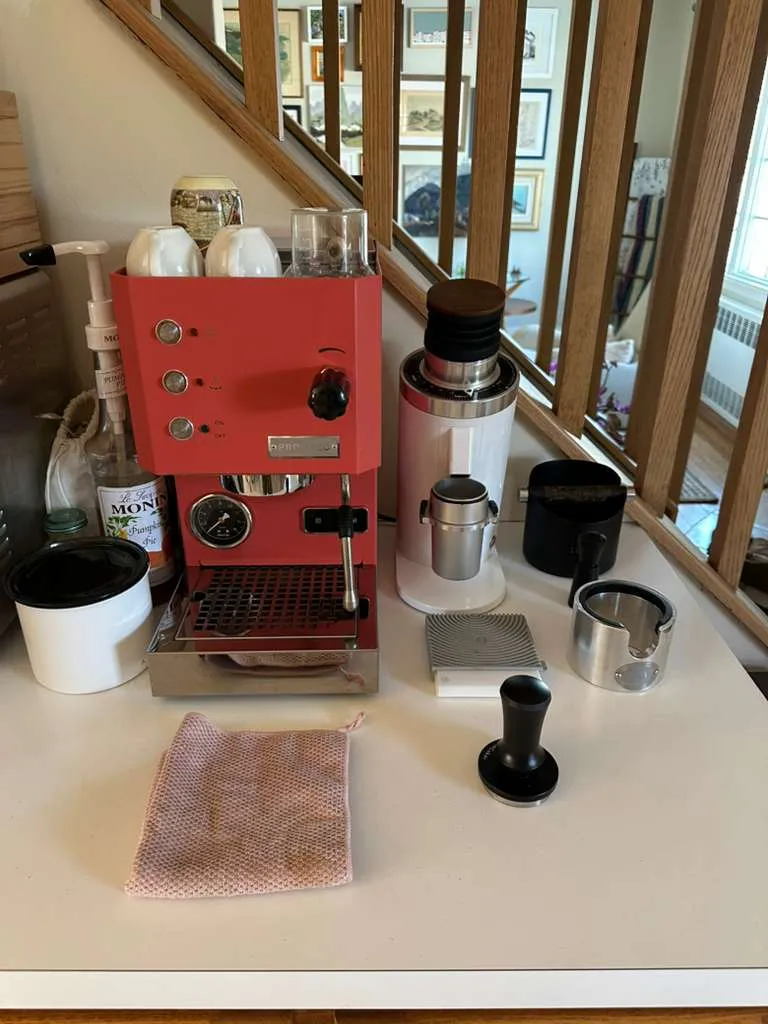
HINT: It's about coffee.
Now this won’t affect a lot of you out there, but for all my serious coffee drinkers, you might get a little frustrated. I drink a cappuccino every morning, get fresh beans delivered every two weeks, and really take my coffee seriously.
If you drink a regular cup, this won’t apply to you… and I know I’m sounding spoiled, but this really screws my flow up every time I’m in Japan.
None of the craft coffee shops open until 10am.
You can go to 7/11, Lawson, or plenty of chain coffee spots and get a decent cup, but I’m looking for a delicious, well-crafted cappuccino every morning because that’s what I make at home.
In the U.S., craft coffee shops open at 6am to catch the morning crowd, so even if I didn’t have my machine, I could find a great cup no problem.
In Japan, that’s not the case and when I’m there for extended periods like I am every winter, I end up begrudgingly suffering through automated 7/11 cappuccinos (which aren’t terrible… but still not what I’m looking for).
I end up getting weirdly homesick for my espresso machine.
So why is this like this?
In America, specialty coffee basically grew up around the commuter rush. We wake up half-awake, jump in the car or onto the subway, and that 6–9am window is prime real estate for cafés.
The whole third-wave coffee model is built to serve people who need their latte before work, preferably fast, hot, and to-go.
Shops staff up for it, design around it, and rely on it as their busiest part of the day.
Japan just doesn’t run that way. Most people grab a coffee from a convenience store, buy a can coffee from a vending machine, drink something at home or at the office, or sit down for a proper “morning set” at a kissaten or Komeda.
There isn’t a massive wave of people demanding a perfectly textured cappuccino at 7:15am on their way to work, so specialty cafés simply don’t organize their business around that crowd.
On top of that, craft coffee in Japan often isn’t meant to be rushed. A lot of the best cafés feel more like tiny coffee ateliers than quick stop-and-go spots.
You sit at a counter, talk to the barista, chat with you friends, watch them weigh beans, maybe chat about roasts, and actually take your time.
It’s much closer to traditional kissaten culture, where coffee is something you experience rather than something you shotgun before a meeting.
That naturally pushes things later in the morning, toward the chill mid-morning crowd of remote workers, students, freelancers, and regulars who want to linger, not sprint.
Then there’s the reality of who actually runs these places.
In Japan, a huge number of excellent cafés are basically one person, one espresso machine, maybe one helper, operating out of a space the size of a studio apartment.
If you’re that owner, opening at 6am means waking up at 4:30, doing all the prep yourself, dialing in shots before you’ve even had your own coffee, and burning yourself out for a crowd that might not even materialize.
If your real customer flow doesn’t start until 10am anyway, why would you do that to yourself?
What’s ironic is that Japan actually does “morning coffee” really well, it’s just not built for cappuccino people like me. Instead of flat whites and oat lattes, you’ve got beautiful morning service sets: coffee, toast, and an egg for like ¥500.
You’ve got old-school kissaten serving immaculate drip coffee, and places like Komeda where you can sit for hours and nobody cares. For many Japanese people, that is the perfect morning. It just isn’t mine.
So yeah… at the end of the day, this is kind of a “me problem.” Every winter I spend in Japan, I’m not really missing American food or big apartments or TV, I’m missing my espresso machine.
Maybe I need to invest in another machine at my Otaru house..
Browse opportunities yourself: Check out current listings at Nipponhomes.com
Book Consultation | Subscribe to our newsletter
Hey guys we partnered with a company I’ve personally used for years.
If you’re traveling, especially like I do to Japan for months at a time, don’t skip insurance.
Nomad Insurance Essential covers you in 175+ countries for unexpected illness or injury, plus delays, lost luggage, and trip interruptions.
You can buy it before you leave or even while you’re already abroad.
Single-trip or auto-renew every 4 weeks if you’re slow traveling.
I never travel without it.
This content is for informational and educational purposes only and reflects my personal opinions and experience. I am not a licensed financial advisor, tax advisor, or attorney. Readers should conduct their own due diligence and consult qualified professionals before making any investment decisions.

Take the Next Step
Join our community for exclusive insights and resources on Japanese real estate investments.

Our team
Meet the founders.

Derek has been working in the Airbnb space for the past 10+ years and recently purchased a home in Japan. He is excited to bring this investment opportunity to others in the States & abroad.

Nick has a passion for adventure and has always dreamed of owning a property in Japan. His dreams finally came true when Derek brought him in on a deal of a lifetime in Hokkaido, Japan - one of Nick's favorite places on Earth.